It’s early June. You’ve just landed in Paris, Lyon, or Lille, ready to dive into an intensive two-week summer program. Your mind is full of dreams about French culture, networking, and academic growth. But there’s an important point to consider: where are you going to sleep? Finding your summer school accommodation in France during the peak of summer is difficult. Between the wave of tourists and the rules of the French rental market, many students end up overpaying for hotel rooms or getting lost in administrative paperwork. Fortunately, a new way of living is changing the game for students who need flexibility without sacrificing comfort or social life.
In this article:
The Summer challenge: Finding a home for a short-term stay in France
The excitement of a summer program often hits a wall when it comes to logistics. Most summer schools in France last between two and four weeks, starting in early June and wrapping up by late July. In the eyes of a traditional French landlord, this is not the best duration possible.
The “short-term lease” hurdle in the French market
The French rental system is built for long term contracts. Standard unfurnished leases usually last for years. Even furnished student contracts are typically signed for at least nine months. While some lease exists for shorter stays -like the bail mobilité (mobility lease)-, many traditional landlords are still reluctant to manage the high turnover of a two-week stay.
For an international student, this creates a massive barrier. Landlords are reluctant and often ask for a “garant”, a person who can cover your rent if you fail to pay, mostly French. Without a local contact or a French bank account, getting your foot in the door of a classic studio is almost impossible.
June and July: the most competitive months of the Summer
From June to July, France becomes the world’s top tourist destination; you aren’t just competing with other students. In cities like Paris, Marseille, or Bordeaux, the demand for small apartments skyrockets as travelers flood in for the summer holidays.
According to Campus France, the number of international students has increased by 8% over the last year, reaching over 400,000 individuals. By combining this academic influx to the seasonal tourist rush, the housing market reaches its breaking point. Prices for temporary rentals can double or even triple. For a student on a budget, this summer peak means that being proactive is not just a choice. It’s a requirement. If you haven’t secured a spot by May, you might find yourself choosing between a very expensive hotel or a room located two hours away from your school.
Summer schools accommodation: It’s time to compare your options
When you start your search for summer program accommodation in France, three main alternatives usually pop up: the classic studio, a hotel room, or an Airbnb. At first glance, they seem fine. But once you look deeply at the actual cost for a short stay, the reality is quite different.
Hotel and Airbnb: When the budget hits a wall
If you’re coming for a two-week program, your first reflex might be to check booking platforms. It’s easy, right? You click, you pay, you show up. However, summer is France’s high season. According to a recent report by Statista, the average daily rate for a hotel in major French cities can easily exceed €120 during the peak of July.
The math for a 14-day stay is staggering. You’re looking at nearly €1,700 just for a bed without a kitchen. Eating out for every meal will drain your savings faster than you can say “croissant.” With service fees and cleaning costs, Airbnb isn’t much better. It often becomes a luxury rather than a student-friendly choice. You might get a roof, but you won’t get a community.
Renting a studio: The administrative nightmare
Some students try to rent a private studio to “live like a local.” It sounds romantic until you face the French bureaucracy. To rent a traditional apartment, you need to set up your own contracts for:
- Electricity
- Gas – if that’s the energy in your apartment
- Internet – but you won’t be able to wait for a technician to install a fiber box for your 15-day stay
- Home insurance – it’s mandatory in France even for short periods rental
Most landlords want stability and a French guarantor. For an American or Chinese student – those who participate the most in summer programs – providing a rental application (dossier) that meets these requirements is an uphill battle that rarely ends right.
Coliving: The ultimate “ready-to-live” solution
If you’re coming to France for a summer program, you don’t want to spend your first three days at the town hall or on the phone with an internet provider. You want to drop your bags and head to the nearest café. This is the “ready-to-live” philosophy of co-living.
An all-inclusive living solution
The biggest stress of moving is the hidden costs.
In a standard rental, the price you see on the ad is rarely the price you pay. You have to add utility fees (charges) for building maintenance, water, electricity and heating. In most co-living spaces, everything is bundled into your monthly rental price. You get:
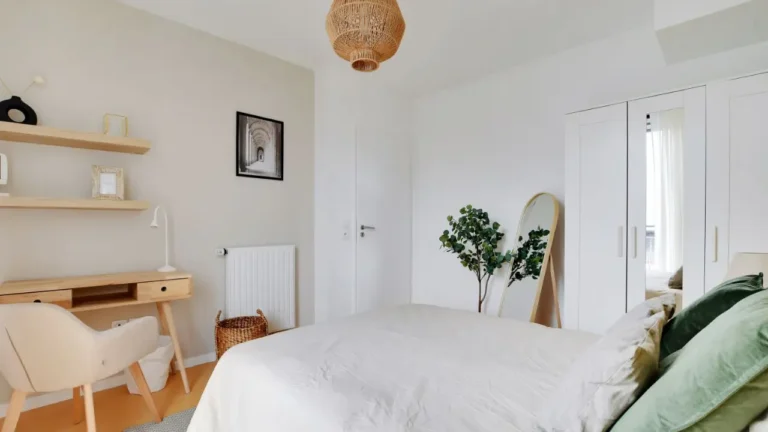
- A fully furnished bedroom with a desk – that is essential for those summer assignments
- High-speed internet – that is ready the second you arrive
- Water, gas, and electricity already set up – nothing better to start on the right foot
- Home insurance included
- Regular cleaning of common areas
For a student (and their parents), this transparency is priceless. No more complex math to figure out how much the month will actually cost.
A flexible accommodation tailored for summer programs
Standard French leases are rigid. They are built for people staying for a minimum of a year. However, co-living understands the rhythm of modern education. It provides a much more flexible offer than traditional landlords do. This flexibility is a lifesaver for international students whose visas or flight schedules might not perfectly align. You book for the duration of your program. You don’t pay for empty days you don’t need.
This is the rental game changer.
Traditionally, to rent in France, you need a physical guarantor, someone living in France, or not, who earns three times the rent. For an American, Chinese, or even a French student from a different region, this is the number one reason applications get rejected.
Co-living platforms have modernized this process. They use digital verification and are accustomed to international profiles. They understand that your university enrollment and your passport are proof of your reliability. To ease your rental search process, they offer :
- Virtual tours of your room and apartment
- Digital contract signing
Everything is made to secure your summer school accommodation in France while sitting on your couch from New York, Shanghai, or Berlin.
An offer made to beat the international student loneliness
A summer school program is about more than just credits and lectures. It is about the people you meet. Co-living means community. For a student arriving in France for the first time, the social safety offered by co-living is the difference between a “good” summer and a “life-changing” one.
Landing in a new country is exhilarating. You don’t know where the best supermarket is, how the laundry works, or which bus to take. In a traditional apartment, you are on your own. In a co-living house, you arrive in a pre-built social circle. Research shows that community living significantly reduces anxiety for expatriates. You’ll likely find other students or young professionals who have been there for a few months already. They are your immediate “local guides.” They know which bakery has the best pain au chocolat and which bars offer the best student discounts.
With Colivys, draw your roadmap to a stress-free Summer
The community vibe while keeping your own privacy
Co-living spaces are designed with common areas. This naturally leads to micro-moments of connection. You might start your Tuesday evening cooking your own meal and end it by sharing a dinner with a student from Brazil, a researcher from Germany, and a local French student. These connections often turn into weekend plans. Whether it’s a picnic under the Eiffel Tower or a train trip to see the castles of the Loire Valley, having housemates means you’ll easily find a buddy to spend time with. For parents back home, knowing their child is part of a group provides an immense peace of mind.
One common misconception about coliving is that you lose your privacy. Modern co-living, like the rooms provided by Colivys, prioritizes your personal space. Your bedroom is your private sanctuary. It’s where you study, sleep, and decompress. You get the best of both worlds – as Hannah Montana would say -: the vibrant energy of a shared house when you want it, and a quiet, locked door when you need to focus on your finals or call your family. This balance is crucial for students who need a productive environment to succeed in their intensive summer courses.
An offer made to maximize your budget
At Colivys, we believe that a summer program is about more than just where you stay. It’s about experiencing the city you’re living in.
The cost of living in France is relatively high, and managing your fixed housing expenses is one of the most effective ways to keep your budget under control.
If you choose to stay in a hotel during your summer program, keep in mind that you won’t have access to cooking facilities. As a result, you should budget at least €100 per week for meals, although this can vary significantly depending on the city. If you opt for a traditional apartment, additional costs should also be expected. You may need to set up internet and electricity contracts -or take over existing ones- which will increase your overall expenses. It’s also important to consider notice periods, as rental agreements in France typically have a minimum duration of around one year.
Coliving offers a more flexible and cost-effective alternative, allowing you to better manage your budget and make the most of your stay. With all-inclusive pricing, you can save several hundred euros. Money you can spend on what truly matters: enjoying your experience.
Enjoy a simplified booking process
At Colivys, we made our rental search process easy by providing you :
- Virtual tours – It’s perfect to explore our room ads and houses through high-quality photos and 3D tours on our platform. You see exactly what you get.
- Online reservation – Once you find the perfect room near your summer school, you can book it instantly.
- Digital contract – No need to be there physically. You sign your lease electronically. It’s legally recognized by French authorities and can be used for your visa application if needed.
- Dedicated support – At Colivys, our team speaks your language. We understand the specific needs of international students. We are here to answer questions about the neighborhood, the house rules and everything that may be important for you to know.
Unlike traditional agencies that ask for a mountain of paper, Colivys keeps the application process simple. As summer programs primarily draw students from China, the USA, and beyond, you will need:
- Proof of identity – A valid passport or ID card
- Proof of enrollment – Your acceptance letter from the French summer school or university
- Proof of funds – Since most students don’t have a French salary, a bank statement or a letter from a guarantor (like your parents) is usually enough
Choosing co-living for your summer program means choosing peace of mind. You aren’t just renting a room; you are joining a lifestyle that celebrates sharing, simplicity, and discovery. While others are struggling with Wi-Fi passwords and electricity bills, you’ll be out there, making memories and enjoying the French art de vivre.